

Beyond the Swing: The Life-Changing Benefits of Golf for Kids in 2026
- sggolfcoach

- Aug 3
- 11 min read
Updated: 7 days ago
We believe that golf is more than a game; it's a bespoke environment where a child's potential is meticulously nurtured through every stroke. This article explores the multifaceted benefits of golf for kids, showing you how the sport serves as a powerful tool for building physical health and mental resilience. You'll discover how the discipline of the course translates into better focus and a sophisticated social skill set that offers lifelong advantages. We'll examine the journey from the first swing to the development of a character that's ready for any future challenge.
Table of Contents
The Physical Foundation: Why Golf is a Superior Low-Impact Sport
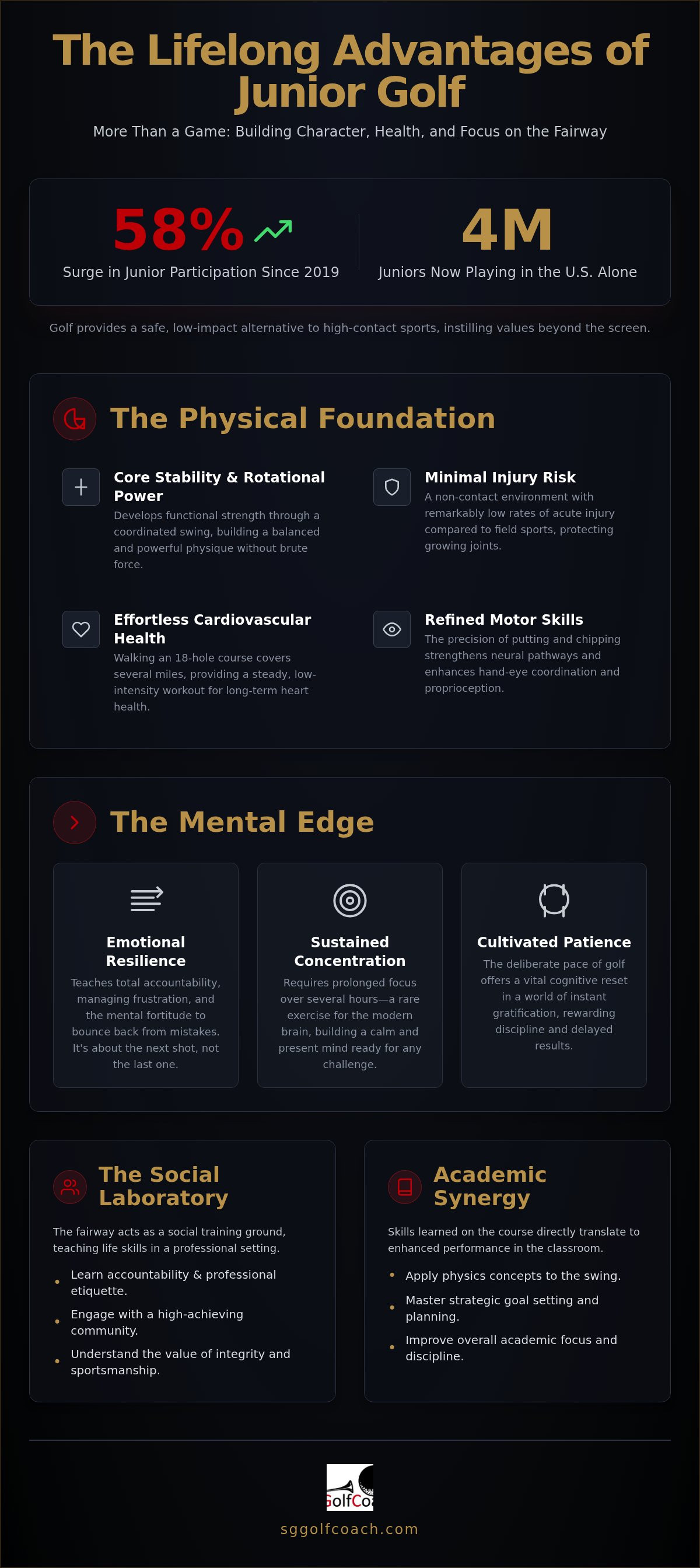
Golf provides a sophisticated platform for physical development that many parents often overlook. While mainstream team sports frequently prioritize brute force and high-speed collisions, golf focuses on functional strength through rotational power and exceptional core stability. Every swing requires a coordinated effort from the legs, torso, and shoulders, creating a balanced physique that supports a child's natural growth. This is one of the primary benefits of golf for kids; it builds a foundation of strength that is as graceful as it is powerful. By engaging in Junior Programs, students learn that true power doesn't come from tension, but from the seamless transfer of energy through the body.
Beyond the mechanics of the swing, the sport encourages consistent cardiovascular activity that feels effortless. Walking an eighteen-hole course can cover several miles, providing a steady, low-intensity workout that promotes long-term heart health. Throughout the history of golf, the game has remained an outdoor pursuit that connects players with the environment, offering a refreshing and active break from sedentary digital habits. It is a sport of endurance and persistence. It is a game that rewards the steady mover.
Refining Hand-Eye Coordination and Fine Motor Skills
The "short game" is where true mastery begins. Putting and chipping require a level of precision that strengthens neural pathways, demanding a delicate touch that high-impact sports rarely address. Through repetitive, intentional practice, children develop deep muscle memory that lasts a lifetime. This process significantly enhances proprioception, which is the body's internal ability to sense its position and movement in space. Mastering a consistent swing isn't just about hitting a ball; it's about fine-tuning the meticulous connection between the mind and the muscular system. This refined coordination often translates into better performance in other athletic endeavors, making golf a foundational pillar for any young athlete's development.
A Lifetime Sport with Minimal Injury Risk
Many parents carry valid concerns about the high-impact nature and injury rates of sports like rugby or football. Golf offers a prestigious, low-risk alternative that protects a child's physical longevity while they are still developing. Because it is a non-contact environment, the rates of acute injury are remarkably low when compared to popular field sports. As a Premium Mentor, we ensure that Bespoke Coaching focuses on biomechanically sound movements to prevent any repetitive strain. Golf stands as the safest sport for growing joints because it replaces high-speed collisions with controlled, fluid motion that respects the body's limits.
The Mental Edge: Building Focus and Emotional Intelligence
Golf is often described as a game played on a five-inch course; the space between your ears. For a young learner, the course acts as a high-performance laboratory for emotional intelligence. Unlike team sports where a child can rely on others to carry the momentum, golf places the player in a position of total accountability. They must learn to manage frustration when a shot goes astray and develop the mental fortitude to bounce back immediately. This resilience is one of the most profound benefits of golf for kids, as it teaches them that a single mistake doesn't define the entire journey. It's about the next shot, not the last one.
While many popular sports rely on short bursts of intensity, golf requires sustained concentration over several hours. This demand for prolonged focus is a rare exercise for the modern brain. Children learn to toggle their attention between social interaction and the deep, immersive state required for a successful swing. Through our Bespoke Coaching, we help students master this mental rhythm, ensuring they remain present and composed from the first tee to the final green. It's a skill that builds a calm, focused mind ready for any challenge.
Cultivating Patience in a World of Instant Gratification
In an era of scrolling feeds and instant results, the deliberate pace of golf offers a vital cognitive reset. The game doesn't rush for anyone. This "slow" environment actually encourages healthy brain development by rewarding delayed gratification. A critical part of this development is the pre-shot routine. By following a consistent, disciplined set of steps before every swing, children build habits that prioritize the process over the immediate result. There are many compelling reasons kids should play golf, but the ability to value long-term improvement over a quick win is perhaps the most transformative for their future success.
Decision Making and Strategic Thinking
Course management is essentially real-world problem solving in a sporting context. Every hole presents a new puzzle where players must visualize their desired outcome, assess risks, and plan their trajectory. They have to account for environmental variables like wind speed, turf conditions, and elevation changes. This level of strategic planning builds executive function skills that are directly applicable to academic and professional life. Because the player acts as their own referee, they also develop a deep sense of integrity and independent thinking. They learn to trust their own judgment, making calculated decisions under pressure without looking to a sideline for constant instruction.
The Social Laboratory: Etiquette and the "Boardroom of the Fairway"
Golf is unique because it's the only sport where children are largely responsible for their own governance. On the course, they manage their own scorecards and declare their own penalties without a referee hovering over their shoulder. This creates a foundation of radical accountability that is rarely found in other youth activities. It introduces them to a community of like-minded, ambitious peers who value discipline and excellence. They aren't just playing a game; they're learning to navigate a high-standard social circle where respect is the baseline for entry.
Understanding the "unwritten rules" of the course builds a level of sophisticated social awareness. Whether it's maintaining the pace of play or respecting a playing partner's line of sight, these small gestures of etiquette foster a deep sense of empathy and situational consciousness. These are the soft skills that translate directly into leadership roles later in life. Golf also provides a rare bridge for multi-generational bonding. A ten-year-old can share a meaningful afternoon with a grandparent or a family mentor, gaining wisdom through natural conversation that happens between shots. This environment makes the benefits of golf for kids go far beyond physical activity, turning the fairway into a classroom for life.
Integrity and the Honor System
In golf, calling a penalty on yourself is the ultimate test of character. It's a quiet, powerful lesson in honesty that resonates far beyond the green. When a child admits to a ball moving in the rough or a double-hit, they're building a personal code of conduct based on truth rather than the fear of being caught. This practice ensures that their moral compass remains steady even when no one is watching. A child who plays golf develops a reputation for reliability that precedes them in every other area of life.
Networking Skills for a Future Career
The "four-hour conversation" is a unique feature of the game that forces children to move beyond digital distractions. They must engage in sustained, polite dialogue with adults and peers alike, which builds a level of conversational confidence essential for professional success. Golf is widely recognized as the primary sport for business development; starting early gives children a significant head start in understanding professional dynamics. For parents looking at long-term pathways, exploring a Junior Golf Program Singapore can provide the necessary structure to turn these early social interactions into a lifelong professional advantage. It's about preparing them for the boardrooms of the future while they're still enjoying the fresh air of today.
Academic Synergy: How Golf Skills Translate to the Classroom
The transition from the green to the classroom is more seamless than many parents realize. While the physical and social aspects are vital, the cognitive demands of the sport create a unique synergy with academic performance. One of the most significant benefits of golf for kids is the development of "deep work" capabilities. In an age of fragmented attention, focusing on a single task for several hours across an eighteen-hole round trains the brain to maintain high-level concentration. This mental endurance directly translates to the stamina required for complex problem-solving and long-form study sessions.
Goal Setting and the Growth Mindset
Lowering a handicap is a long-term project that requires breaking down a massive objective into manageable, daily practice routines. Students learn to track their statistics, analyzing data from their short game or drive accuracy to identify specific areas for improvement. This data-driven self-correction is exactly how high-achieving students approach their grades. By finding a structured environment through a reputable golf academy Singapore, parents can ensure their children are learning these methodical planning skills under expert guidance. It's about teaching them that success is a result of deliberate, measured effort rather than luck.
Applying Physics and Math on the Green
The fairway is a living laboratory for STEM subjects. Every shot requires a child to subconsciously or consciously calculate distances, wind resistance, and the geometry of a sloping green. They aren't just hitting a ball; they're managing velocity and force to achieve a specific trajectory. Using a "mental scorecard" also keeps their basic arithmetic and memory sharp throughout the day. When a child sees the practical application of physics in their own golf swing, the abstract concepts taught in school suddenly become tangible and exciting. This hands-on experience builds a level of mathematical intuition that is difficult to replicate in a traditional classroom setting.
Are you ready to see how a structured approach to the game can transform your child's focus and academic confidence? Explore our specialized Junior Programs to begin their journey toward mastery today.
Starting the Journey: Finding the Right Junior Program
Embarking on a golfing journey is a significant milestone for any child. While the benefits of golf for kids are vast, the quality of the initial experience often determines their long-term commitment to the sport. Parents must navigate the choice between private Bespoke Coaching and social group classes, weighing the need for technical precision against the desire for peer interaction. We recommend a "fun-first" philosophy during these early stages to ensure that the rigorous discipline of the game doesn't lead to early burnout. Instead, we focus on fostering a genuine, lasting passion for the fairway. Selecting equipment that grows with your child is also essential; poorly fitted clubs can hinder progress and lead to unnecessary physical frustration during those formative years.
A child's first few lessons should feel like an invitation into a prestigious community rather than a chore. By prioritizing enjoyment and small victories, we help students build a positive association with the game that carries them through the more challenging technical phases. This foundation of joy is what eventually transforms a casual hobby into a lifelong pursuit of excellence. It's about creating a safe space where they can fail, learn, and succeed with confidence.
Indoor vs. Outdoor Training in Singapore
In our tropical climate, consistency is often the biggest hurdle for young players. High temperatures and unpredictable rainfall can disrupt outdoor practice schedules, which is why luxury simulators have become a game-changer for modern training. Utilizing indoor golf Singapore facilities allows children to master their swing in a controlled, climate-controlled environment. These professional simulators provide immediate, data-driven feedback on every shot, making the learning process both transparent and highly engaging. It's the perfect entry point for younger children, allowing them to build confidence and refine their technique before they ever step onto a full-scale course.
Personalized Coaching for Maximum Growth
Every child possesses a unique athletic profile and a distinct learning style, which means a "one-size-fits-all" curriculum rarely delivers elite results. The role of a "Premium Mentor" goes far beyond teaching the mechanics of a grip or stance; it's about shaping a child's sporting identity and building their inner self-assurance. Personalized attention allows for meticulous adjustments that respect a child's individual pace of development. This tailored approach ensures that every student feels seen, supported, and challenged in equal measure. If you're ready to provide your child with a sophisticated foundation for success, Book a personalized junior assessment with SgGolfCoach to begin their transformative journey today.
Nurturing the Leaders of Tomorrow on the Fairway
Golf is far more than a physical pastime; it's a sophisticated investment in your child's character and cognitive development. From the low-impact physical foundation to the deep work capabilities developed on the green, the benefits of golf for kids extend into every facet of their future lives. They learn to navigate the complexities of social etiquette and strategic decision-making while enjoying a safe, healthy outdoor environment. It's a journey that builds a reputation for integrity and a mind ready for academic excellence. By choosing a sport that rewards patience and precision, you're giving them a competitive edge that lasts a lifetime.
We invite you to empower your child’s future with our Bespoke Junior Golf Programs. Our specialized curriculums are meticulously tailored to individual age and skill levels, ensuring that every student receives the precise guidance they need to excel. With professional mentors dedicated to character growth and access to both luxury indoor simulators and premium outdoor ranges, we provide the ultimate environment for transformation. Give your child the gift of a lifetime sport that opens doors to professional and personal success. We look forward to acting as your partner in guiding them toward their full potential.
Frequently Asked Questions
What is the best age for a child to start playing golf?
Most children find success starting between the ages of five and six. At this stage, they've developed the basic motor skills and attention span necessary to grasp the fundamental mechanics of a swing. We focus on a "fun-first" approach for younger learners to build a positive relationship with the sport. Starting early allows them to naturally absorb the social etiquette and coordination that define the game.
Is golf too expensive for a child just starting out?
Golf is a scalable investment that doesn't require a massive initial outlay. While high-performance sets exist, introductory junior clubs are quite accessible, and many programs provide equipment for the first few sessions. When considering the long-term benefits of golf for kids, the value lies in the life skills and character development they gain. It's an investment in their future social and professional confidence.
How long does it take for a kid to see progress in their golf swing?
Visible progress in a child's swing often appears within the first few weeks of consistent coaching. While technical mastery is a lifelong pursuit, young learners typically experience "small wins" like consistent ball contact or improved aim quite early. Our specialized junior curriculums are designed to provide steady, measurable milestones that keep students motivated. Consistent feedback from a professional mentor ensures that their development remains on the right trajectory.
Can golf really help my child get into a better school or university?
Golf offers significant advantages for academic placement and university applications. Admissions officers often view the sport as a hallmark of discipline, integrity, and time management. Beyond potential athletic scholarships, the ability to engage in a "four-hour conversation" with adults provides a level of maturity that stands out in interviews. It demonstrates a child's capacity for deep focus and long-term goal setting in a competitive environment.
My child is very high-energy; will they find golf boring?
High-energy children often thrive in golf because it provides a constructive channel for their focus. The game isn't passive; it's a constant mental puzzle that requires physical precision and strategic thinking. By breaking the game into engaging drills and simulator challenges, we ensure that the experience remains dynamic. It teaches them to regulate their energy, moving between the intensity of a swing and the calm of the fairway.
What equipment does a junior golfer need for their first lesson?
For a first lesson, your child only needs comfortable athletic attire, a pair of sneakers, and a water bottle. Most professional programs provide the necessary junior clubs for introductory sessions to ensure the length and weight are appropriate for the child's height. We recommend waiting until after an initial assessment before purchasing a full set. This allows the coach to provide a bespoke recommendation based on the student's specific needs.
How often should a child practice golf to maintain their skills?
Practicing once or twice a week is usually sufficient to maintain and steadily improve foundational skills. Consistency is far more important than the total number of hours spent on the range. Short, focused sessions help prevent fatigue and keep the learning process enjoyable. By integrating regular lessons with our Bespoke Coaching, students can ensure that every practice session is purposeful and aligned with their long-term growth goals.
Is indoor golf as effective as outdoor practice for kids?
Indoor practice is exceptionally effective, especially for mastering swing mechanics through data-driven feedback. Luxury simulators allow children to see the exact flight of their ball and understand the physics of their movement in a controlled setting. While outdoor ranges are vital for learning to manage wind and turf, indoor sessions provide a consistent environment for building muscle memory. A hybrid approach often yields the most well-rounded development for junior golfers.


Comments