

Questions to Ask a Golf Coach Before Booking Lessons

A sound golf stance starts with balance, not force. Set your feet about shoulder-width apart and distribute your weight evenly. Bend from the hips, soften your knees, and let your arms hang naturally. The most useful questions to ask a golf coach will help you build this foundation and adapt it to your game.
It’s natural to want clear guidance before booking, especially if you’re new to golf or helping a junior get started. Ask how often to take lessons and practise, how the coach uses swing data, what teaching qualifications and experience they have, and how they adapt their approach for different learners. This article covers those topics and what beginner instruction should include, helping you choose lessons with a clearer sense of fit and purpose.
Table of Contents
1. Regular lesson booking and practice frequency
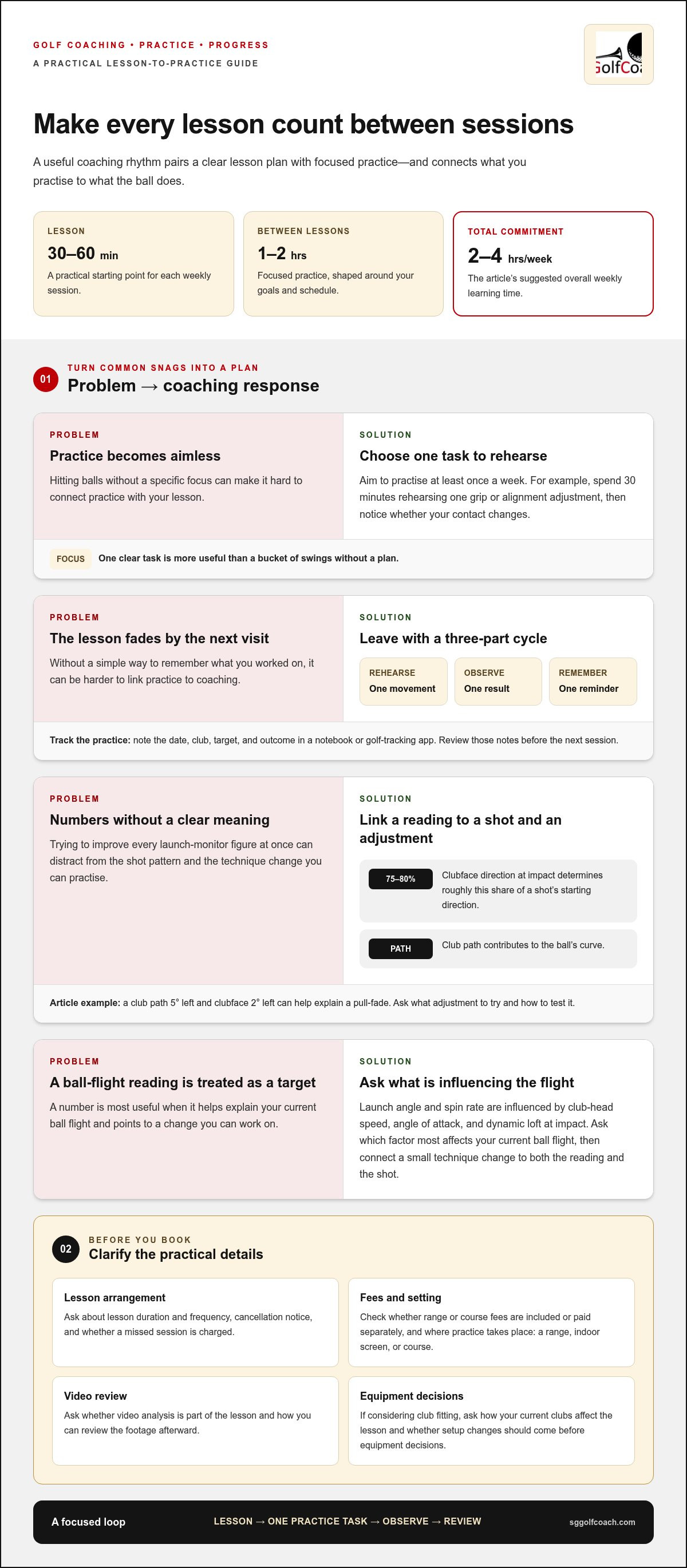
Before booking, ask how long each lesson lasts, how often you should meet, and what to practise between sessions. A practical starting point is a weekly lesson lasting 30-60 minutes, with 1-2 hours of practice between sessions. That creates a total learning commitment of 2-4 hours a week. Your coach can shape the routine around your goals, schedule, and current experience.
Ask, “How often should I practise between lessons, and what should I focus on?” Aim to practise at least once a week between sessions, with a clear task rather than a bucket of aimless swings. For example, use 30 minutes to rehearse one grip or alignment adjustment, then note whether your contact changes. Focused practice can be more effective than spending hours hitting balls without a plan.
Agree on a simple lesson-to-practice cycle. At the end of each session, ask for one movement to rehearse, one result to observe, and one reminder to bring to the next lesson. Record the practice date, club, target, and outcome in a notebook or golf-tracking app. Reviewing those notes before your next session helps connect practice with the coach’s instruction.
Ask what happens if you need to cancel or reschedule, including how much notice is required and whether a missed session is charged. Also clarify whether golf-course or range fees are included in the lesson or paid separately, and whether the venue affects the cost. These details help you understand the full booking arrangement before committing.
Ask whether video analysis is part of the lesson and how you can review the footage afterward. Video of your swing can help reveal patterns in your misses. For example, repeated shots finishing right may point to an issue worth discussing. If you use an app, log the pattern alongside your practice notes and bring the record to your next session.
Clarify where practice takes place and whether you can use a range, an indoor screen, or course-based instruction. Each setting suits different practice tasks, so ask which best fits your current focus. If you’re considering club fitting, ask how your existing clubs affect the lesson and whether changes to your setup should come before equipment decisions. This is one of the questions to ask a golf coach to keep your schedule, practice tools, and equipment decisions aligned.
2. Reviewing swing and launch-monitor data with a coach
Ask how a coach combines observation with launch-monitor readings. Numbers can clarify what the ball does, but they matter most when linked to a change you can practise. Focus on understanding which measurement relates to your shot pattern, rather than trying to improve every figure at once.
For example, clubface direction at impact determines roughly 75 to 80 percent of a shot’s starting direction. Club path contributes to the ball’s curve. Ask, “How do my clubface and path explain this shot?” A club path 5 degrees left and clubface 2 degrees left can help explain a pull-fade. The useful follow-up is what adjustment the coach recommends, and how you’ll test it.
Launch angle and spin rate are influenced by club-head speed, angle of attack, and dynamic loft at impact. Ask which factor most affects your current ball flight. Then ask the coach to show how a small technique change affects both the reading and the shot. This makes launch-monitor data a learning tool, not a set of numbers to chase.
Should I choose private or group golf lessons? Private instruction gives the coach more time to focus on your individual swing and goals, while group lessons offer a shared learning experience. Choose based on whether you prefer individual feedback or learning alongside others, and how each format fits your practice routine.
To assess your level, a coach can observe your swing and ask about your experience, common misses, and goals. Share a specific example, such as struggling to start shots on target, then ask how progress will be measured. This connects your goal with visible changes in technique and ball flight.
Useful corrective feedback gives you a clear action and a way to assess it. Beginners should prioritise sound technique over pure power. Ask whether adjustments to your grip or stance could help reduce a hook or slice, then practise the change before adding another correction. If the feedback feels technical, ask the coach to explain it in plain language.
An experienced amateur can ask, “Which pattern in my misses should we address first, and what evidence supports that choice?” Also ask how the coach will distinguish a repeatable swing issue from an occasional poor strike. For example, compare clubface and path readings across shots before changing your swing.
Ask whether ball choice should reflect your swing speed. Golfers with faster swing speeds may choose harder balls for distance and more roll; slower swing speeds may suit softer balls for spin and loft. Discuss those trade-offs before changing balls, so you can assess the effect alongside your swing work. If individual feedback suits your goals, explore adult golf lessons as a way to develop your technique with coaching.
3. Coach credentials and teaching style
Ask about the coach’s teaching qualifications and experience with golfers at your level. Go beyond playing history: find out what training supports their instruction and how they continue developing as teachers. A strong playing record can demonstrate skill, but playing ability alone doesn’t guarantee effective teaching. Look for clear answers about how they help students learn.
Then ask, “How would you structure a lesson for someone with my goals?” A coach should be able to describe the first steps, such as observing your technique, identifying a priority, and setting a focused practice task. If you want more consistent contact, for example, ask how the lesson will address that goal without overwhelming you with multiple changes.
Good teachers explain complex movements in simple terms. Notice whether the coach can describe a swing adjustment in language you understand and show what it should feel like. If an explanation includes unfamiliar terms, ask for a demonstration or a plain-language example. Clear communication helps you remember the instruction after the lesson.
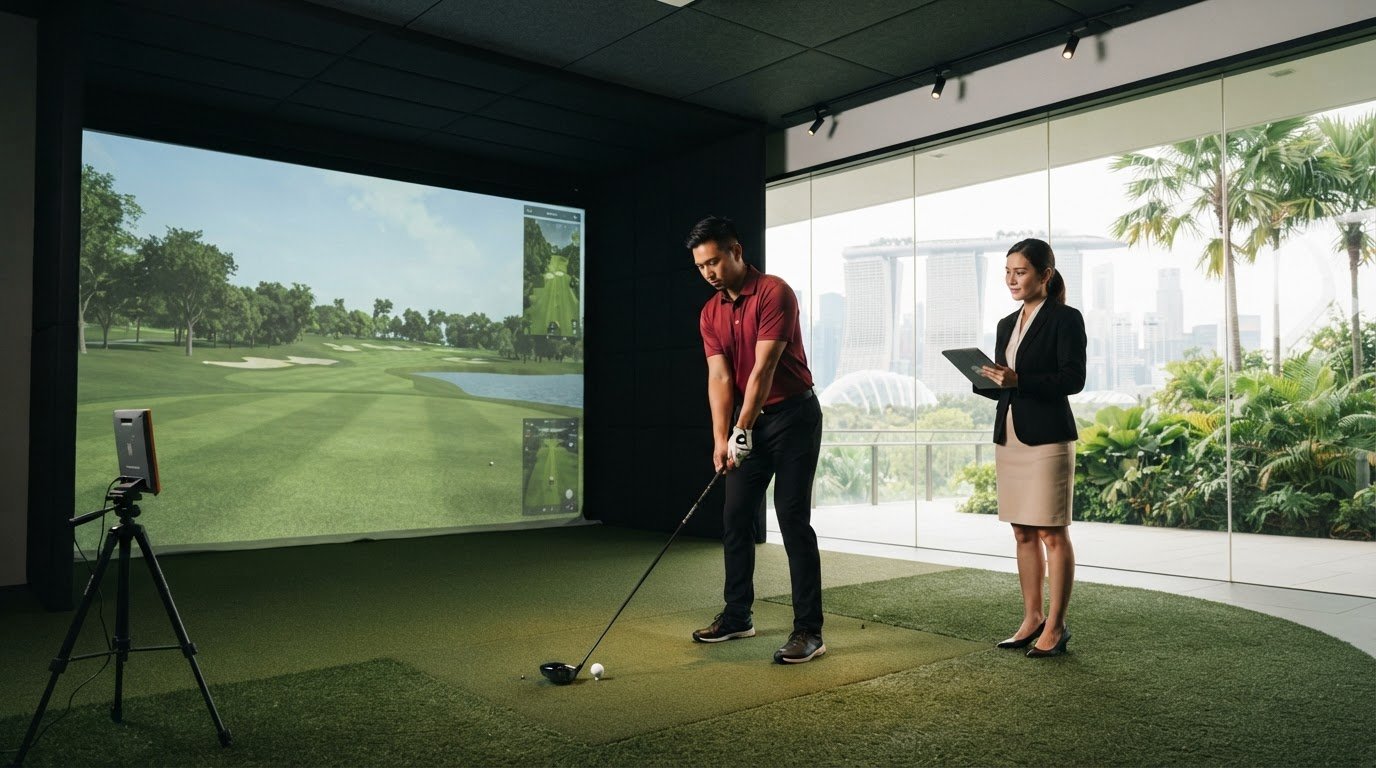
What golf coaching styles and lesson formats are available? A coach may offer one-on-one instruction, group classes, or indoor screen-golf sessions. Instruction can be technical and data-led, demonstration-focused, or built around guided practice. Ask which format suits your learning preferences and how the coach adapts explanations when a movement doesn’t click immediately.
Ask how feedback is delivered during a session. Some students benefit from one concise cue at a time; others prefer to understand the reason behind each adjustment. For example, ask whether you’ll try a movement first, watch a demonstration, or discuss the intended result before practising. The answer can show whether the coach’s style supports your concentration.
Find out how the coach responds when progress feels uneven. Ask for an example of how they might revisit an earlier skill, such as grip or posture, before introducing a new challenge. A thoughtful approach treats setbacks as useful information: the coach can adjust the task, explain its purpose again, and keep your learning focused.
Also ask how the coach tailors instruction to your experience, confidence, and preferred pace. A new golfer may need simple explanations and time to repeat a movement, while an experienced player may want more detailed discussion. Share what helps you learn, such as watching a demonstration before trying the movement yourself.
Before booking, use a short checklist: ask about qualifications, relevant teaching experience, lesson structure, feedback style, and how progress is reviewed. Then consider whether the coach’s answers address your goals. A clear explanation of what you’ll work on and why makes it easier to decide whether the teaching relationship feels like a good fit.
4. Golf instructor qualifications and teaching approach
Ask about the instructor’s teaching qualifications and coaching experience, then connect the answers to your needs. Playing ability alone doesn’t guarantee effective teaching. Strong tournament experience may demonstrate skill, for example, but you also need explanations and exercises suited to you as a learner. Ask what kinds of golfers they teach and how their approach changes for beginners and experienced players.
Next, ask how a golf lesson moves from assessment to practice. A clear approach might begin with watching you hit a few shots, then identifying a priority such as balance or contact. Ask how the instructor chooses that priority and what you’ll practise afterward. This shows whether feedback responds to an observed need or follows the same routine for every student.
Ask how coaching can help you progress from hitting balls to playing a full round. A golf academy can provide a progression plan for that transition. Ask which skills it covers, such as choosing a target, managing distance, and preparing for different lies. The answer should show how practice skills connect with decisions on the course.
Find out how the coach explains a movement you find difficult. Good golf teachers can describe complex movements in simple terms. If you struggle to understand a change in your backswing, for instance, ask for a demonstration and one cue to remember. Then repeat the movement and describe what you felt. This exchange shows whether the instructions are clear enough to use independently.
Ask how the instructor adapts when an exercise isn’t working. A useful next step might be to slow down the rehearsal, change the target, or return to your setup. Ask what signs the coach will look for before adding difficulty. When the coach explains the adjustment, you have a practical way to keep learning instead of guessing.
Clarify how progress will be reviewed across lessons. Ask what the coach will observe, such as more consistent contact or better control of a chosen shot. Then ask how that observation will guide the next session. Concrete markers help you see whether practice is carrying over, without relying only on the result of a single shot.
Before booking, describe one goal and ask the instructor to outline the first steps. If you want to move from range practice towards playing a full round, for example, ask which skills come first and how you’ll practise them. Compare the answer with your schedule, experience, and preferred pace. Look for a coach whose qualifications support a thoughtful, easy-to-understand plan.
5. Lessons adapted for junior and adult beginners
A beginner lesson should suit the learner, not follow a single script. A junior may respond best to short, playful activities, while an adult may prefer a clear explanation before practising. Ask how the coach adjusts the pace, instructions, and exercises for each learner. The right fit helps both age groups build fundamentals without treating their needs as identical.
For a junior, ask how the coach keeps activities engaging and attention focused. A simple target game can make grip, alignment, and contact feel practical rather than abstract. Ask how each skill is introduced and how the activity changes if the child loses interest. Short, varied tasks can help a young learner stay involved while repeating a movement.
For an adult beginner, ask whether lessons begin with grip, posture, setup, and basic golf rules. A coach might first show the student how to hold the club, then guide them into a balanced stance before they hit a ball. Ask how each new skill builds on the previous one, so early practice feels structured rather than like a series of unrelated tips.
Age isn’t the only difference. Ask how instruction changes for someone who learns by watching a demonstration and someone who learns through verbal cues. A junior might benefit from copying a slow-motion movement, while an adult may prefer a short explanation followed by a few controlled attempts. Share what helps the learner concentrate and remember instructions.
Ask how the coach will assess a beginner’s starting point. A useful first lesson can look at grip, stance, balance, and contact, then choose one priority for practice. For a junior who struggles to make contact, that might mean a simple setup exercise. For an adult who feels unsure about the rules, the coach can explain basic etiquette alongside swing fundamentals.
Parents and adult learners can ask how progress will be explained after each lesson. Request one skill to practise and a clear sign to look for, such as a balanced finish or more reliable contact. This gives the learner a manageable focus before the next session and helps parents support practice without taking over the coach’s instruction.
Before booking, describe the learner’s experience and preferred pace. Ask what the first lesson would cover, how activities would suit their age, and how the coach would keep practice engaging. A junior may benefit from guidance for a young beginner, while an adult may want a step-by-step introduction to grip, stance, and the basic rules of play.
SgGolfCoach: Junior Programs
SgGolfCoach offers Junior Programs for young learners ready to build golf fundamentals through age-appropriate instruction. Adults can explore Adult Lessons, while Screen Golf Booking offers an indoor option for practice. PC & Handicap supports golfers working on their playing profile.
Turn to SgGolfCoach when you’re ready to move from choosing a coach to planning lessons around a junior or adult learner’s goals. The questions you’ve considered, from teaching style to practice needs, can help you decide what to focus on and explain what the learner hopes to achieve.
For a natural next step, contact SgGolfCoach or visit sggolfcoach.com to explore the available options.
Take the Next Step with a Clear Goal
Turn your intention into a starting point for learning. Before your first session, decide what you’d like golf to add to your routine: a new skill, enjoyable time together, or more confidence in practice. Keep that goal simple. It gives you a useful way to start the conversation and makes your questions to ask a golf coach specific to the experience you want.
SgGolfCoach offers Junior Programs for young golfers, Adult Lessons for adults, and Screen Golf Booking for indoor golf experiences. These options give learners different ways to begin or continue developing their interest in the game. Share who the lessons are for and what they hope to achieve, so the conversation can focus on a suitable next step.
Contact SgGolfCoach about lessons and take the first step toward a more considered golf-learning experience. Every player starts somewhere, and a clear goal can make that beginning feel purposeful.
Frequently Asked Questions
What Is the Proper Stance?
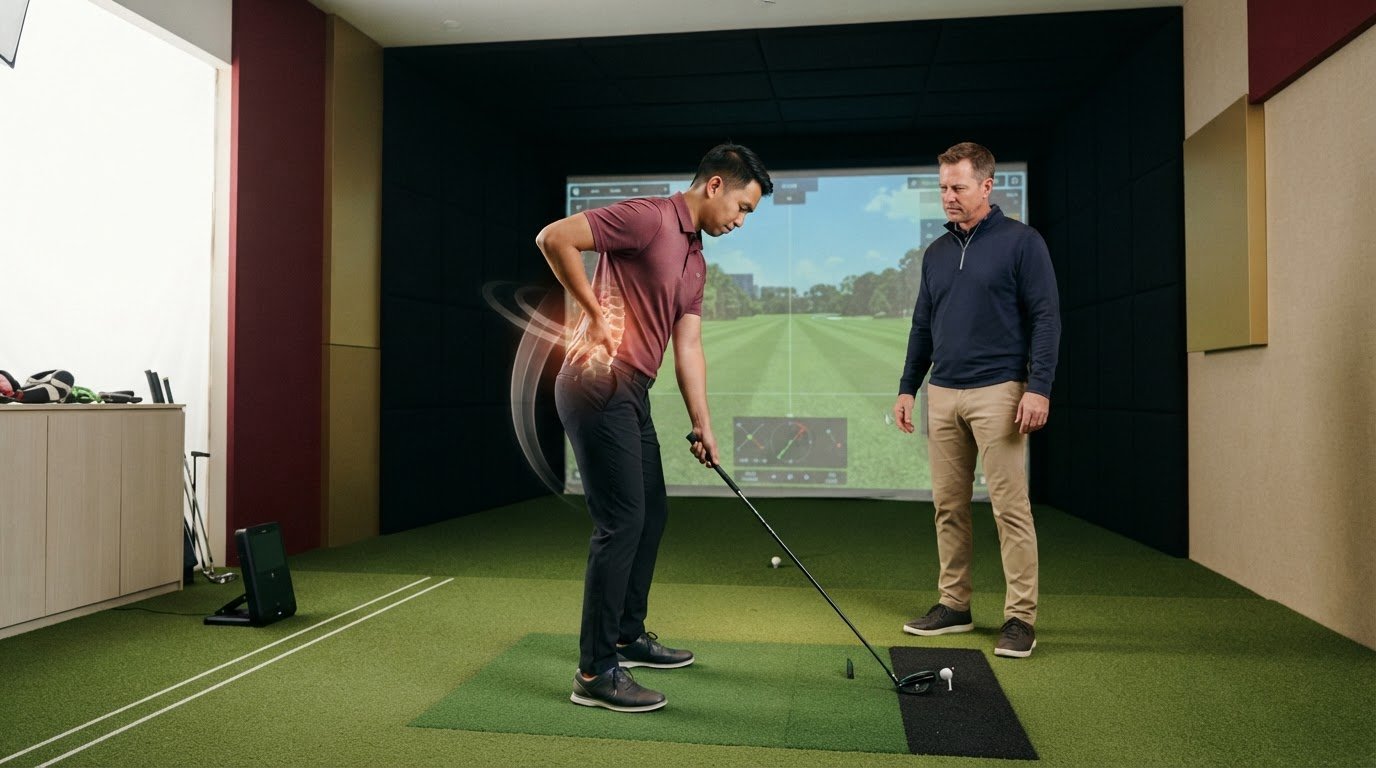
Set your feet about shoulder-width apart and balance your weight evenly. Bend forward from your hips, soften your knees, and let your arms hang naturally with slightly bent elbows. Ask a coach to check your setup from the front and side. A mirror or phone video can also help you notice whether your posture changes between practice swings and shots.
How Can I Stop Hooking or Slicing Shots?
First, identify whether the ball curves consistently in one direction. Then ask a coach to inspect your grip, stance, clubface, and swing path. A small adjustment to your grip or alignment may change the result, so test one change at a time. At a driving range, choose a clear target and compare several shots before deciding whether the adjustment helped. Avoid trying to fix every part of your swing at once.
Do I need to bring my own club to this session?
If you already own a club, bring it so the coach can see how you use your current equipment. If you’re a beginner without clubs, ask about loaner or rental clubs at the facility, as many golf facilities provide them. You don’t need a complete set to discuss your swing or practise basic contact. Wear comfortable sports clothes and flat shoes so you can move freely.
Does the coach provide extra materials for practice?
Ask whether you’ll receive a written practice note, a drill description, or a video clip after the lesson. If there are no take-home materials, record the coach’s key cue on your phone before leaving. For example, note the setup change, the club used, and what a successful practice swing should feel like. A short record helps you repeat the lesson focus without relying on memory alone.
How do I check a golf coach's qualifications and experience in Singapore?
Ask the coach to describe their teaching qualifications, coaching experience, and the types of students they work with. Then ask how they adapt instruction for a beginner or a player with a specific goal. Playing ability alone doesn’t establish teaching effectiveness; notice whether the coach can explain a movement clearly and connect it to a practical exercise you can try.
What should a beginner ask a golf coach?
A beginner can ask what the first session will cover, which fundamentals to learn first, and how to practise safely and purposefully. Useful questions to ask a golf coach include how they’ll introduce grip, setup, and basic rules without overwhelming you. Also explain what you hope to do, such as enjoy a first round with friends, so the coach can shape early lessons around a relevant goal.
How often should I take golf lessons, and how much practice is needed?
A practical starting point is a weekly lesson lasting 30-60 minutes, with 1-2 hours of practice between sessions. That creates a total commitment of 2-4 hours a week. Aim to practise at least once between lessons, and give each session one clear focus. Your schedule and learning goals can shape the routine, so ask the coach to suggest a plan you can maintain consistently.
What equipment should I bring to my first golf lesson?
Bring any golf club you already own, comfortable sports clothes, and flat shoes. If you don’t have a club, ask about loaner or rental equipment at the facility before your lesson. A phone can help you note instructions or record a swing, with the coach’s agreement. You don’t need to buy a full set before learning the basics; start with the essentials you can use comfortably.

Comments