

Why Am I Not Improving at Golf? Make Practice More Effective

More practice doesn’t always mean more progress. If you’re asking “why am I not improving at golf?”, the cause may be repeating swings without identifying what leads to inconsistent contact, then carrying that same pattern into every session. Progress depends less on hitting more balls and more on practising with a clear purpose.
It’s understandable to expect steady improvement when you’re putting in time. But swing mechanics, focus, and movement all affect what your practice reinforces. A small change in attention can matter as much as hitting another bucket of balls.
This article explains how grip, setup, posture, and clubface control support a more repeatable swing, and why movement patterns matter as you learn. You’ll also find ways to make range sessions more purposeful, practise course-like decisions, and move on from a poor shot without letting it affect the next one. Understanding what may be holding you back can help you make each session a more considered step towards better golf.
Table of Contents
Balancing swing development with mental skills
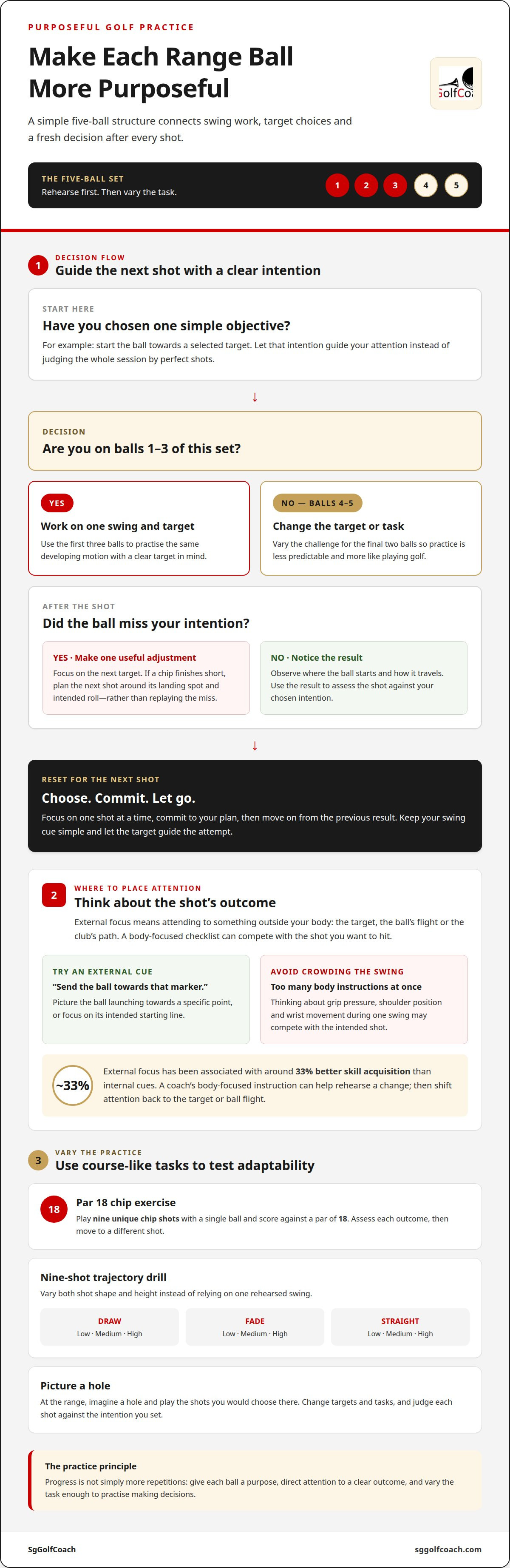
Improvement comes from combining swing work with the focus and decision-making needed to use it. A range session is more useful when each ball has a purpose and you approach each shot with fresh attention.
Swing Development
Swing development means refining the movements that help you strike the ball and direct it towards a target. A useful session balances repetition with varied tasks, so you practise a developing motion in more than one situation. For example, use a five-ball set: work on one swing and target for the first three balls, then change the target or task for the last two.
Mental Skills
Mental skills are the focus and emotional habits that shape how you approach each shot. A poor result can distract you from your next decision, while pressure can make you rush or hesitate. Focus on one shot at a time, commit to your plan, then let go of the previous result. At the range, picture a hole and play the shots you would choose there.
Connect technique and mindset instead of treating practice as a choice between them. A swing drill develops a specific movement, while a course-like task asks you to choose a target and commit to an outcome. In a five-ball set, use the first three repetitions to work on a swing. For the final two, change the target or objective. This makes practice less predictable and more like playing golf.
Small goals make that balance easier to manage. Choose one objective, such as starting the ball towards a selected target, instead of judging the whole session by whether every shot is perfect. A clear target gives your attention somewhere useful to go and provides a practical step towards a larger aim, such as lowering your handicap, without expecting an immediate score change.
Short-game practice can also combine technique, decisions, and emotional control. In Karl Morris’s Par 18 exercise, play nine unique chip shots with a single ball and score against a par of 18. Each attempt gives you one outcome to assess before moving to a different shot. Another nine-shot drill varies the shape and height: hit draw, fade, and straight shots at low, medium, and high trajectories. These tasks encourage adaptability rather than reliance on one rehearsed swing.
After a poor shot, identify one useful adjustment, then focus on the next target. If a chip finishes short, for example, plan the next shot around its landing spot and intended roll instead of replaying the miss. Keep your swing cue simple and let the target guide the attempt. This supports deliberate swing development and a calmer response, preparing you for varied shots rather than only familiar repetitions.
Research on external focus and skill acquisition
Where you place your attention during a swing can affect how freely you move. Shifting focus from body mechanics to the shot’s intended result gives practice a useful direction.
External Focus
External focus means directing your attention to something outside your body, such as the ball’s flight, the target, or the club’s path. Focusing on body movements can increase muscle tension and hinder performance. Instead of thinking, “Keep my arm straight,” picture the ball launching towards a specific point. That image gives your swing a clear outcome.
Choose a target and notice where the ball starts and how it travels. If it starts right of the target, observe the result without adding several body instructions. For the next shot, focus on the intended ball flight or the club’s path through impact. This doesn’t mean ignoring technique. It means using one simple external cue while working on a movement, rather than monitoring every part of your body at once.
External cues can also help you transfer practice to the course. A range target gives you a concrete intention: start the ball at a chosen marker or send it along a particular line. You can judge the result against that intention. If you keep thinking about grip pressure, shoulder position, and wrist movement during the same swing, those thoughts may compete with the shot you want to hit.
Skill Acquisition
Skill acquisition is the process of learning a movement so it becomes more dependable across different shots. In golf, external focus has been associated with around 33% better skill acquisition than internal cues. That comparison suggests attention matters during learning, not just while trying to score. A target-focused cue may help you practise a new movement without turning each swing into a checklist of body positions.
Use a cue that describes the result you want. For a low shot, picture the ball skimming beneath an imagined branch; for a straight shot, focus on its starting line. Keep the cue consistent for a short run of attempts, then vary the target or trajectory. This helps you see whether the movement holds when the task changes, rather than judging progress by one well-struck ball.
There’s still a place for internal cues. If a coach identifies a specific movement to adjust, a body-focused instruction can help you understand the change. Once you’ve rehearsed it, shift attention back to the target or ball flight. That transition links the movement to a useful shot outcome. Focused golf coaching can help connect a swing adjustment with a clear external cue, so practice stays purposeful rather than crowded with competing thoughts.
Taking notes and tracking shots during on-course practice
Deliberate practice gives each shot a purpose, a target, and a result to review. Simply hitting balls repeats swings without testing decisions. On the course, brief notes can help show whether a miss came from an unrealistic choice, poor execution, or both.
To identify a major weakness, record four shots you want to hit during a round. For each one, note whether the choice was realistic for the lie and situation, then whether you executed it successfully. If realistic shots repeatedly miss in the same way, that pattern deserves attention. If the choice itself was risky, decision-making may be a bigger opportunity than swing mechanics.
There’s no single practice frequency that suits every golfer. Fit sessions around your schedule and give each one a defined task: work on a particular shot, vary the target, or simulate a short-game situation. A focused session with a clear objective is easier to assess than one measured only by time or balls hit.
Course management affects scores because your shot choice shapes the challenge that follows. Aiming away from trouble may leave a longer approach, for example, but it can make the next shot more manageable than a risky line would. Record your intended target and the result. Comparing them helps distinguish a sound decision from poor execution.
For Singapore Golf Association handicap tracking, use your handicap record alongside round scores and shot notes to understand progress. The record offers a score-based measure, while notes can show what influenced a particular round. SgGolfCoach’s PC & Handicap offering supports this tracking. Combine handicap progress with observations about shot choices and recurring misses.
Keep the record concise enough to use during play. A simple entry can capture the hole, intended shot, whether the choice was realistic, and whether the outcome matched the plan. For a short-game session, recreate course situations and track progress towards a session target. If you’re practising an up-and-down challenge, use par 2 for each hole as the benchmark, then note which part of the attempt cost a stroke.
Review your notes after the round, not after every swing. Look for repeated patterns in realistic choices, such as approach shots that consistently finish short or recovery attempts that bring trouble into play. Choose one pattern to address in your next practice session. This turns score tracking into a useful link between on-course decisions and focused skill development.
Grip, setup, posture and clubface control
These fundamentals shape how the club meets the ball, before a larger swing change can help. Start with grip, setup, posture, and basic clubface control, then build later swing movements on that foundation.
Grip and Clubface Control
Grip and clubface control describe how you hold the club and direct its face towards impact. The clubface influences the ball’s starting direction. If shots repeatedly start right of your intended line, for example, observe the face direction at address and after impact. Change one element at a time so you can tell which adjustment affects the result.
Use a short, controlled shot to assess the relationship between your grip and the clubface. First, aim the face at a clear target. Then make a compact swing and note where the ball starts, rather than changing your whole motion straight away. If the face appears misaligned before the swing, reset it before adjusting your hands. This helps distinguish an address issue from a movement issue.
Clubface awareness also matters around the green, where a small change can alter how the ball leaves the club. For a bunker shot, try imagining a smiley face on the club and keeping it facing back towards you during the shot. Use the image to remind yourself to observe the face, not to add several new swing thoughts.
Setup and Posture
Setup and posture are the position and balance you establish before swinging. A repeatable address gives your movement a consistent starting point. Before each shot, check your stance, posture, and club position in the same order. If contact changes after an inconsistent setup, reset your address before making a larger swing adjustment.
Posture can also change how the club approaches the ball. For a bunker shot, lowering your tailbone at address lowers your hands and the club, creating a shallower club arc towards the ball. Practise the adjustment with a controlled bunker swing and observe the contact. This shows why setup is active, not just a position to assume before swinging.
Keep the sequence simple: establish your grip, aim the clubface, set your posture, then swing. If a shot goes off line, consider which part of the sequence may have changed. A face that points away from the target at address, for instance, offers a different clue from a balanced setup followed by inconsistent contact. Record the specific observation to give your next practice attempt a clear purpose.
Build gradually. Establish a consistent grip and address before adding another swing thought, then assess one ball flight or contact result. A bunker shot offers a useful example: adjust your posture, use the smiley-face cue, and notice how the club interacts with the sand. Separating adjustments helps you understand what changed instead of rebuilding the whole swing after every imperfect shot.
Movement patterns in golf learning
Golf improvement depends on how your body organises a swing, not just on what one position looks like. A repeatable movement pattern connects balance, rotation, and club delivery into one coordinated action.
Fitness, mobility, and injury can affect how comfortably and consistently you move through a golf swing. Limited mobility or discomfort may lead you to change your balance or shorten your motion, altering contact and direction. Adapt practice to your current movement, and seek appropriate professional guidance if you have pain or an injury.
Think of the swing as a sequence, not a collection of poses. Your body shifts pressure, turns, and moves the club towards the ball; a disruption early in that sequence can affect what follows. If your balance moves towards your toes during the backswing, for example, you may compensate during the downswing and struggle to strike the ball consistently. Ask not only whether your backswing looks correct, but whether the whole pattern lets you deliver the club reliably.
This helps explain why copying a textbook position may not solve your problem. Golfers differ in build, mobility, and natural coordination. A movement that feels smooth for one player might create tension for another. Observe ball flight and contact as well as the movement itself. If the same miss appears repeatedly, consider whether an earlier part of your motion is prompting a later compensation.
A low-handicap golfer at 70 can be a useful reminder that effective movement need not look forceful or elaborate. Simplicity matters: a coordinated swing can produce a dependable result without chasing an exaggerated turn or extra effort. Focus on a movement you can repeat with balance, then assess whether it supports the shot you intend to play.
There’s no fixed timeframe for improving a handicap. Progress depends on your starting point, the consistency and purpose of your practice, the shots you can repeat on the course, and how your scores develop over time. A movement change may feel promising at the range, but handicap progress reflects performance across rounds, not one successful swing.
To explore your movement pattern, compare a comfortable swing with one that produces a familiar miss. Notice where your balance changes, where movement feels restricted, and whether your finish remains controlled. Keep the observation specific, such as “I lose balance towards my toes,” rather than “my swing is wrong.” That detail focuses practice and helps distinguish a movement issue from a poor decision or isolated strike.
For a more structured view of handicap progress, track your golf handicap alongside observations about movement and on-course results. A combined view can help you connect changes in your swing pattern with the performance that matters: the shots you can reproduce during play.
SgGolfCoach: Screen Golf Booking
SgGolfCoach offers Screen Golf Booking for golfers who want a focused setting to practise with purposeful routines. Use a session to work on one clear objective, such as repeating a movement pattern or testing a target-focused cue, then reflect on what felt consistent.
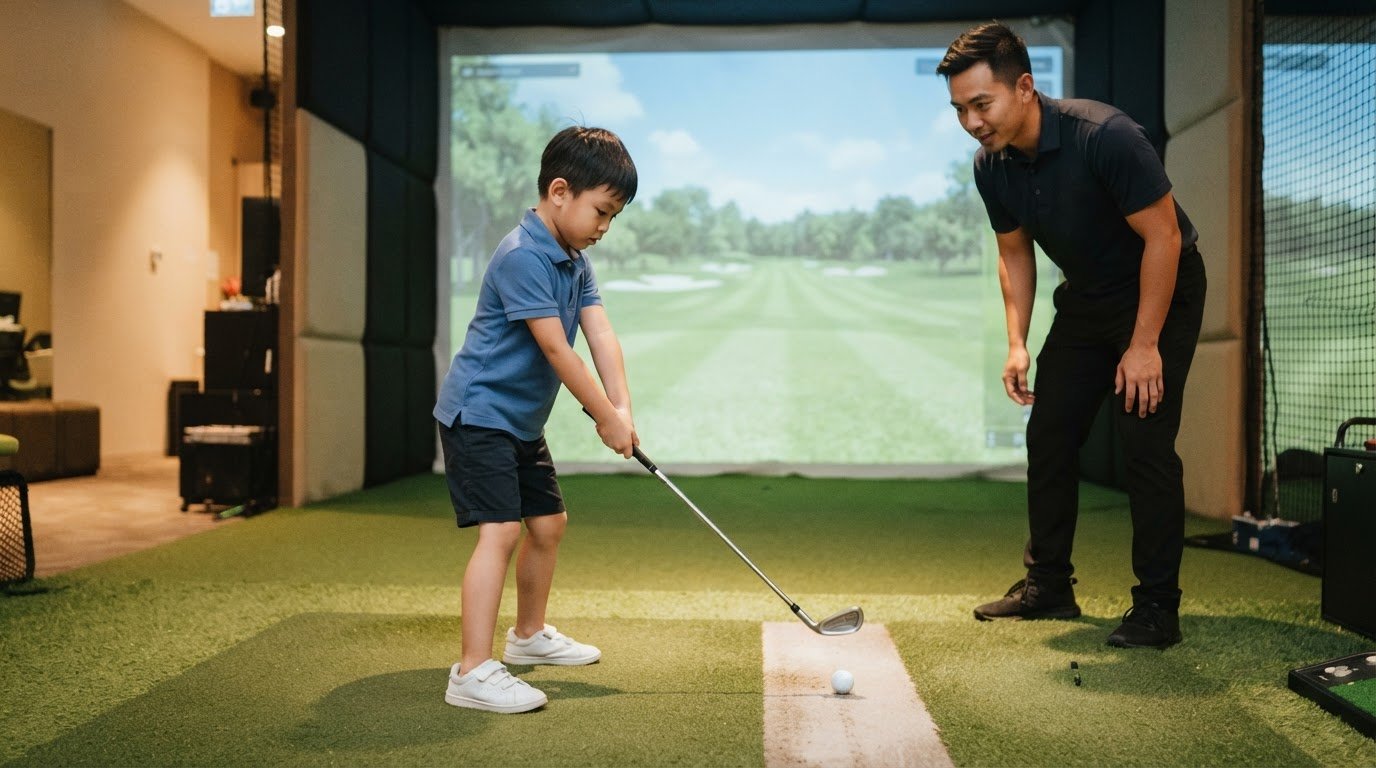
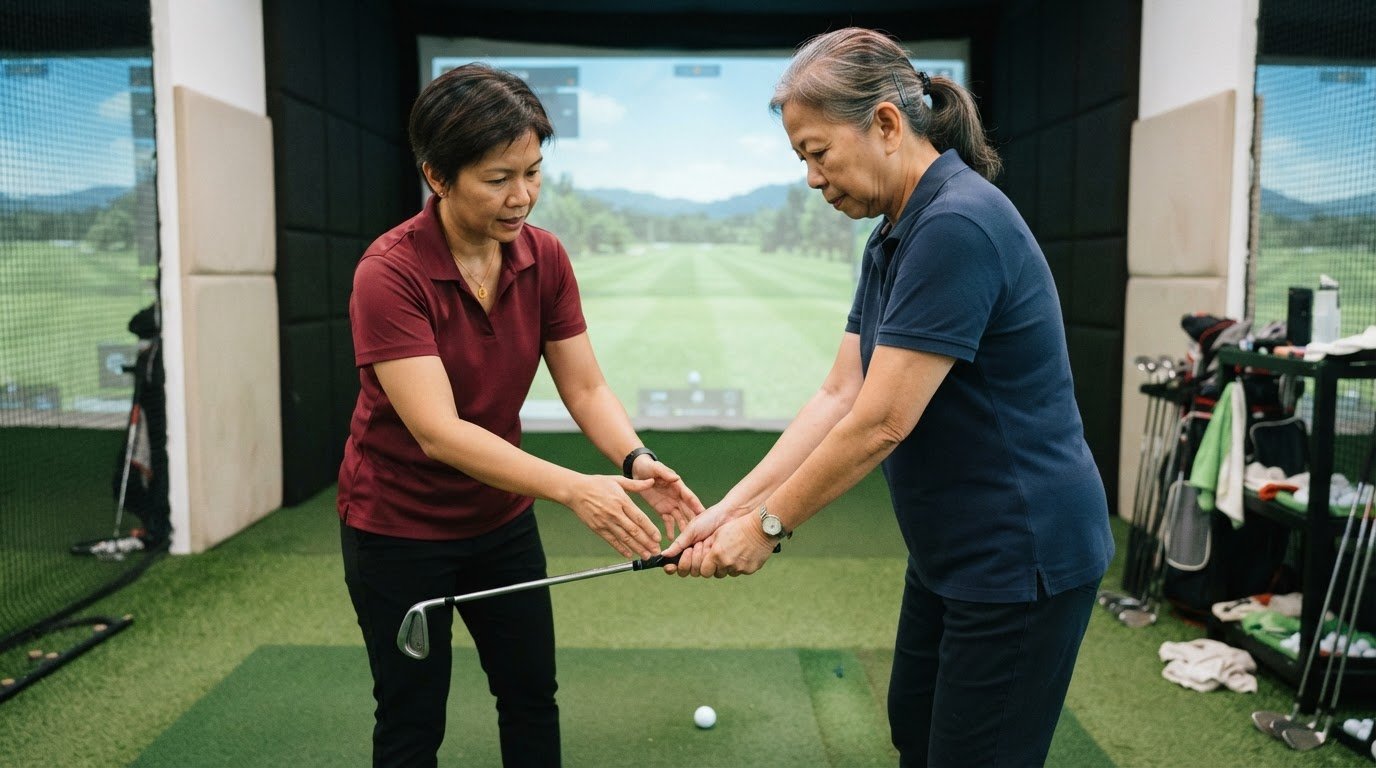
If you’d benefit from guidance on refining swing mechanics and practice habits, Adult Lessons offer a coaching pathway. Junior Programs support younger players as they develop their golf skills. PC & Handicap can also help you connect your progress with handicap tracking.
Choose the option that fits your current goal, whether you’re looking for structured practice or support with your game. Contact SgGolfCoach to discuss your next step.
Choose your next purposeful step
Understanding why you are not improving at golf starts with turning general frustration into one clear focus. Choose a pattern to work on, then give your next practice session a simple intention. You don’t need to rebuild your entire game at once; a considered adjustment can help you see what is changing and what still needs attention.
If you’d value support in deciding what to work on next, SgGolfCoach can help you explore a suitable coaching or practice option for your goals. Contact SgGolfCoach about your golf progress and take the next step at a pace that feels right for you.
Stay curious, keep your focus clear, and make each session count.
Frequently Asked Questions
How does understanding physics help in improving my golf swing?
Understanding basic physics helps you connect swing choices with the ball’s direction and distance. At impact, the club transfers motion to the ball, so the clubface and swing path influence its launch. If a shot curves away from your intended line, for example, consider how the club moved through impact rather than assuming you need more effort. This gives you a practical way to interpret ball flight.
What are the main reasons golfers struggle to improve their game?
Practice can lose value when it lacks a clear objective, feedback, or a connection to the shots you face on the course. A player might spend a session switching between swing thoughts, then have no way to tell which change affected the result. If you’re asking why you are not improving at golf, look for recurring patterns, such as inconsistent contact or decisions that repeatedly bring trouble into play.
What role does the concept of pushing versus pulling play in my swing?
“Pushing” and “pulling” describe different ways golfers imagine producing movement, but neither cue is a universal fix. For example, forcing a pull with your arms can disrupt balance, while pushing hard may create unnecessary tension. Treat either phrase as a personal cue, not a rule for the correct swing. Notice whether it helps you move comfortably and produce the intended shot, rather than judging by how forceful it feels.
Why is it important to focus on movement patterns when learning golf?
Movement patterns matter because a golf shot comes from coordinated actions, not one isolated body position. A player who loses balance while turning may make a late adjustment before impact, even if the backswing looks polished. Notice how your motion connects from start to finish, including your balance at the finish. This wider view can reveal where a repeated miss begins and help you address its cause rather than its symptom.
What are the most common reasons golfers stop improving?
Progress can stall when golfers repeat familiar routines without checking whether those routines meet their current needs. Other obstacles include switching between conflicting swing cues, judging success from a few shots, or avoiding uncomfortable practice tasks. A player who only hits full shots, for example, may overlook weaker putting or chipping. Review actual rounds for recurring scoring problems, then focus on one specific weakness instead of changing everything at once.
How can golf equipment, club fitting, or an incorrect setup limit improvement?
Equipment or setup can make consistent contact harder if a club feels awkward to address or doesn’t suit your natural posture. A player may repeatedly adjust their stance or reach towards the ball to feel comfortable, changing the conditions for each swing. Equipment alone doesn’t explain every miss, so observe whether the same difficulty appears with different clubs. A stable, comfortable address helps you assess your motion more clearly.

Comments